Transport Planning
Networking in the supply chain
 For awarding transport contracts to logistics service providers – as well as for outsourcing complete logistics services – LogistikPlan develops tailored transport concepts for shippers and service providers.
However, a professional and cost-efficient logistics solution does not rely solely on outsourcing. First and foremost, transparency regarding processes, interfaces, transport volumes and costs must be established within the company itself.
► Objectives of transport planning
The objective of transport planning is to achieve an optimum balance between time, quality and cost, in particular by:
- Ensuring security of supply
- Optimising transport costs
- Optimising inventory levels
- Establishing transparent processes
- Reducing environmental impact
Modern transport planning is based on a data model with defined actual and target values. In reality, however, the ideal logistics scenario exists only “on paper”, as transport logistics are subject to daily changes – just like the transport market itself.
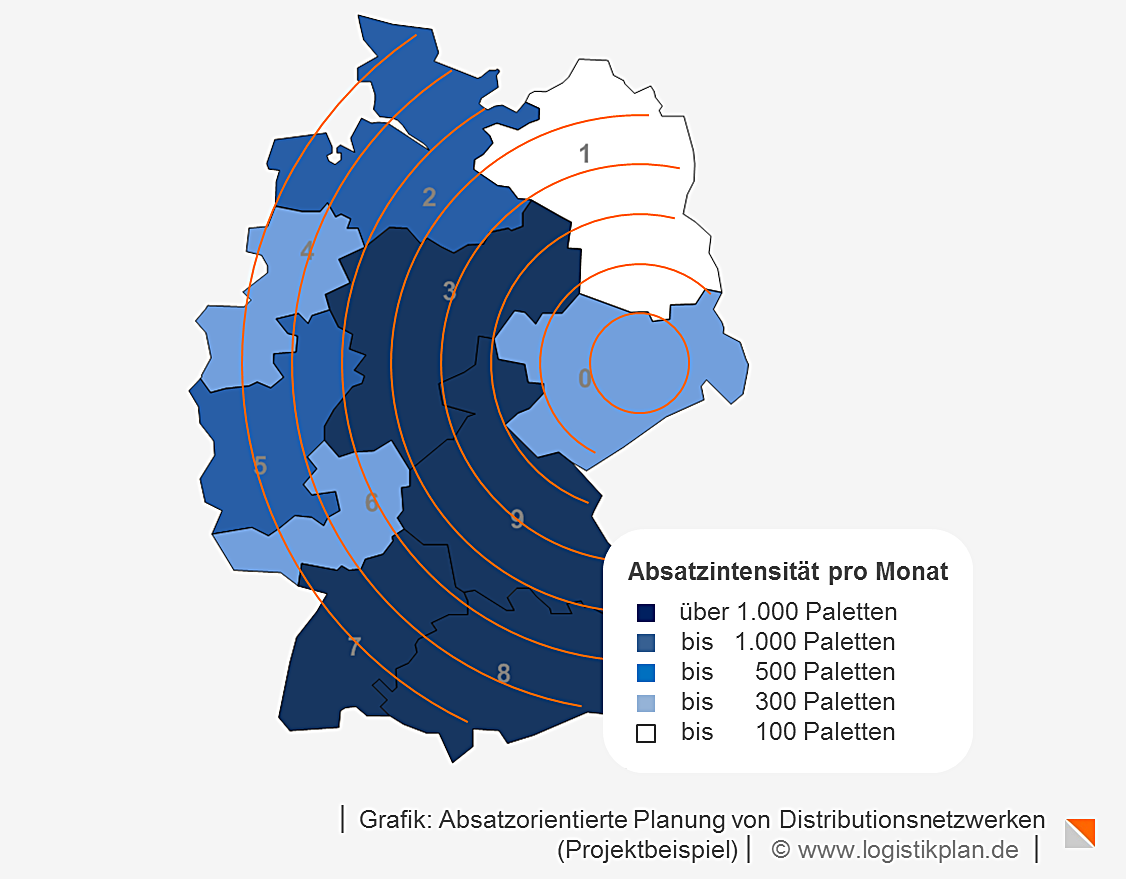
► LogistikPlan principles for transport planning and optimisation
Based on a logistics concept or a transport concept, LogistikPlan consolidates all design requirements into a holistic planning approach – from inbound logistics and warehousing to distribution.
- Integration of all transport requirements into a single transport structure, including full and empty load transports
- Periodic, proactive transport planning to identify future volume changes and optimal order and delivery quantities within the transport network
- Consideration of the entire supply chain and use of synergies, e.g. by integrating inbound and outbound logistics into in-house transport management
- Coordination of route planning with upstream processes (production, assembly, dispatch scheduling)
- Consolidation of transport orders into routes and tours, and evaluation of vehicle utilisation
- Cost reduction through technical optimisation of load units and vehicle space utilisation
► Tasks in transport planning
- Analysis of existing shipment data, transport costs (benchmarking) and service provider contracts (freight rates, SLAs)
- Detailed planning of the transport network, including organisational, geographical and technical design of the defined transport concept for different business units or markets
- Tender management for awarding logistics services
- Specification and tendering of logistics services
- Evaluation of offers and support during contract award (bid negotiations)
- Support during transition to new service providers
► Tools for transport planning
By introducing IT tools, LogistikPlan supports customers on their path towards professional transport planning. We define requirements and assist with system selection, for example:
- Route planning and transport management systems
- Yard management and vehicle weighing systems
- Time slot and dock scheduling systems
- Monitoring and reporting systems for quality measurement and statistics
► Implementation of a route planning system
In small and medium-sized logistics operations, a route planning system serves as a fundamental IT tool for:
- Optimising travel distances
- Reducing the number of vehicles required
- Optimising deployment time
- Minimising freight costs
► Implementation of a transport management system
In larger logistics operations, a transport management system provides an end-to-end IT solution for quotation calculation, order management, transport planning, freight settlement and reporting. It enables:
- Early planning of transport requirements
- Cost-efficient procurement and implementation of transport services
- Transparent processing and monitoring of transport orders
► Implementation of a truck guidance system
For companies with high traffic volumes on site, LogistikPlan recommends a vehicle management system to monitor all inbound and outbound deliveries – from truck arrival and loading to departure.
- Coordination of truck arrivals, call-offs and dock assignment at the plant entrance
- Monitoring of vehicle movements on the site
- Paperless IT support for handling and weighing processes
- Process optimisation through interfaces with forklift control systems and warehouse management systems
► LogistikPlan project example:
Transport planning for a building materials group
► LogistikPlan task:
- Europe-wide optimisation and re-tendering of transport logistics for an internationally operating building materials group
► Key solution elements:
- Distribution via hub-and-spoke systems
- Use of regional carriers in milk-run concepts
- Control rules for optimal dispatch via forwarding agents and CEP service providers
- Design of drop-shipping processes (direct deliveries)
- Standardisation of freight rates across the entire group
► Results:
- End-to-end cost transparency by transport mode and cost driver
- Increase in on-time delivery performance by 20%
- Improvement in pick-up accuracy by 15%
- Reduction of annual transport costs by more than 15%